Your hormones aren't supposed to stay exactly the same forever. Here's what's happening at every stage, and what your body might need from you along the way.
Remember being 22 and wondering why you suddenly had a breakout before your period?
Fast-forward to 35 and you might be thinking about fertility, noticing your cycle behaving slightly differently or wondering why PMS suddenly feels more intense.
Then your 40s arrive and you're Googling things like, "Why am I waking up at 3am?" and "Can perimenopause start this early?"
By your 50s, your hormones are entering another completely different chapter.
Women's hormones naturally change throughout life. But because we're rarely taught what those changes actually look like, symptoms can sometimes feel as though they've appeared out of nowhere.
So, let's change that.
From your reproductive years through perimenopause and menopause, here's a decade-by-decade guide to what may be happening with your hormones.
Your 20s: Your Reproductive Years
For many women, the 20s are a time when menstrual cycles have settled into a relatively established pattern.
During a typical menstrual cycle, estrogen and progesterone rise and fall in a coordinated pattern while follicle-stimulating hormone (FSH) and luteinising hormone (LH) help regulate follicle development and ovulation.
But having a period every month doesn't automatically mean everything hormonal is running perfectly.
Your 20s are also often when conditions such as PCOS/PMOS, endometriosis and other reproductive health concerns become apparent.
What should you be paying attention to?
Your cycle
A menstrual cycle doesn't have to arrive on exactly the same date every month.
However, once you're more than three years beyond your first period and before perimenopause, current international PCOS/PMOS guidance defines irregular cycles as generally being shorter than 21 days, longer than 35 days or fewer than eight cycles per year.
If your periods regularly disappear for months at a time, it's worth finding out why.
Acne that hasn't disappeared since your teens
Adult acne can have many causes, but persistent acne alongside irregular periods, excess facial or body hair or scalp hair thinning can be associated with androgen excess and PCOS/PMOS.
Polyendocrine Metabolic Ovarian Syndrome (PMOS) affects approximately one in eight women, making it worth understanding rather than dismissing persistent symptoms as simply having "bad hormones."
Period pain
Cramping can occur during menstruation, but severe pain that repeatedly interferes with your work, exercise, relationships or everyday life warrants investigation.
Conditions such as endometriosis can begin affecting women from adolescence onwards.
Your fertility
Your 20s and early 30s generally represent your highest reproductive potential.
That doesn't mean every woman in her 20s will fall pregnant easily. Conditions affecting ovulation, endometriosis, fallopian-tube problems and male-factor infertility can all affect the likelihood of conception.
Your hormone-health focus in your 20s:
Get to know what's normal for you.
Track your cycle. Pay attention to persistent symptoms. Build good nutrition, movement, sleep and stress-management habits before you feel as though something has to be "fixed."
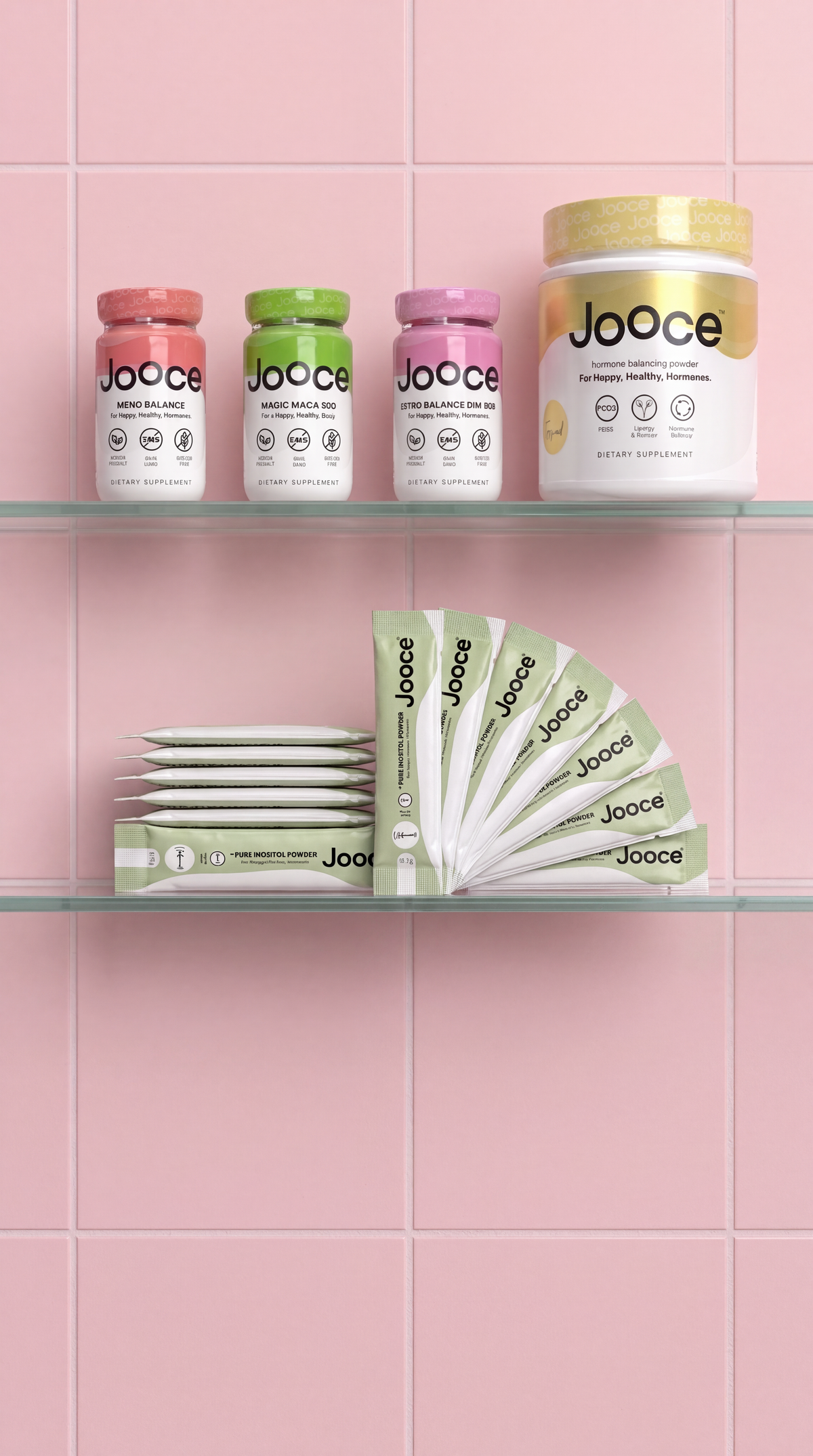
For women navigating PCOS/PMOS or insulin-related hormone concerns, Jooce Hormone Balance Powder or Pure Inositol Powder may form part of a broader nutritional and lifestyle support plan based on individual needs.
Your 30s: When Fertility Starts to Enter the Conversation
There isn't a hormonal switch that suddenly flips when you turn 30.
For many women, periods and hormone patterns remain relatively stable throughout much of this decade.
One important biological change, however, is happening quietly in the background:
your ovarian reserve is declining.
Women are born with a finite number of eggs. Both the number and quality of available eggs decrease with age.
Fertility begins declining gradually around age 30 and the decline becomes faster during the mid-30s.
This is a normal part of reproductive ageing, not a sign that something is wrong.
What might change in your 30s?
Conceiving may take longer
Healthy couples in their 20s and early 30s have roughly a 1 in 4 chance of pregnancy during an individual menstrual cycle. That probability decreases as reproductive ageing progresses.
This doesn't mean turning 35 suddenly makes pregnancy impossible.
It simply means age becomes an increasingly important part of the fertility conversation.
If you're over 35 and have been trying to conceive for six months without success, guidelines generally recommend seeking a fertility evaluation rather than waiting a full year.
Your existing hormone conditions haven't disappeared
If you were diagnosed with PCOS/PMOS in your 20s, turning 30 doesn't make it go away.
PCOS/PMOS is a lifelong endocrine-metabolic condition, although its symptoms and health priorities can evolve over time.
Similarly, symptoms such as painful periods, heavy bleeding or persistent hormonal acne still deserve investigation rather than being blamed on age.
Your lifestyle foundations matter
Your 30s are a great time to start thinking beyond periods and fertility when you hear the words "hormone health."
Blood sugar regulation, cardiovascular health, bone health, muscle, nutrition, sleep and stress all contribute to your long-term wellbeing.
Your hormone-health focus in your 30s:
Think future-proofing.
Understand your fertility if having children is important to you, investigate symptoms rather than tolerating them, and start looking at hormone health as part of your whole-body health.
Depending on your individual needs, Jooce products such as Hormone Balance Powder, Pure Inositol, Magnesium Glycinate, Superior Omega and targeted nutritional support can complement healthy lifestyle habits.
Your 40s: Welcome to the Perimenopause Conversation
This is where things can start feeling a little less predictable.
Perimenopause is the transitional stage leading up to menopause, during which ovarian function changes and hormone levels become increasingly variable.
And no, it doesn't necessarily begin at 50.
For many women, changes begin during their 40s.
One of the first things you might notice is that the cycle you've understood for years suddenly changes.
What's happening hormonally?
Ovulation can become less consistent as you move through the menopause transition.
Estrogen doesn't simply decline in a straight line. Levels can fluctuate considerably, while progesterone exposure may change as ovulation becomes less predictable.
Eventually, ovarian estrogen production declines more substantially as menopause approaches.
This hormonal transition can affect far more than your period.
You might start noticing:
-
Periods becoming shorter, longer, heavier or less predictable
-
Hot flushes
-
Night sweats
-
Difficulty sleeping
-
Changes in mood
-
Brain fog or difficulty concentrating
-
Vaginal dryness
-
Changes in sexual desire
-
Joint or muscle discomfort
-
Changes in body composition
Not every woman experiences every symptom, and not every symptom appearing in your 40s is automatically perimenopause.
Thyroid disorders, iron deficiency, PCOS/PMOS, medication effects and other medical conditions can overlap with menopause-associated symptoms.
Do you need hormone testing?
Not necessarily.
For otherwise healthy women aged 45 and older experiencing typical menopause-associated symptoms alongside menstrual-cycle changes, current clinical guidance generally recommends identifying perimenopause clinically rather than relying on tests such as estrogen or AMH.
That's partly because hormone concentrations can fluctuate considerably during this transition.
Your hormone-health focus in your 40s:
Adapt rather than fight your body.
Prioritise strength training, adequate protein intake, cardiovascular exercise, quality sleep, bone health and metabolic health.
And start thinking about your supplements based on the stage you're actually in.
Jooce MenoBalance has been formulated specifically for women navigating perimenopause and menopause, while Magnesium Glycinate can provide magnesium support as part of your broader nutritional routine.
If you have PCOS/PMOS, remember that entering perimenopause doesn't automatically erase your existing condition. Your healthcare needs may simply evolve as these two hormonal pictures begin to overlap.
Your 50s: A New Hormonal Baseline
Menopause isn't a single day when your hormones suddenly stop.
It's defined retrospectively as your final menstrual period, recognised after you've gone 12 consecutive months without menstruating where there isn't another medical explanation.
The years following that point are called postmenopause.
For many women, menopause occurs during their late 40s or early 50s, although timing varies considerably between individuals.
What's happening now?
Your ovaries are producing much less estrogen and progesterone than during your reproductive years.
Some symptoms experienced during perimenopause may continue for a time, while others may become less noticeable.
But the conversation about hormone health doesn't stop when your periods do.
It simply changes.
Bone health becomes increasingly important.
Estrogen plays an important role in maintaining bone strength.
As estrogen levels decline around menopause, bone loss accelerates, increasing the importance of resistance and weight-bearing exercise, adequate nutrition and appropriate assessment of osteoporosis risk.
Cardiovascular health deserves attention too.
The menopause years are also an important time to keep an eye on:
-
Blood pressure
-
Cholesterol
-
Blood glucose
-
Physical activity
-
Body composition
-
Smoking
-
Alcohol intake
-
Family history
Ageing itself contributes significantly to cardiovascular risk, so menopause shouldn't be viewed as the sole cause. Instead, this stage offers an important opportunity to reassess your overall health.
Vaginal and urinary symptoms matter
Declining estrogen can affect tissues of the vulva, vagina and urinary tract.
Women may experience vaginal dryness, discomfort during sex, urinary symptoms or recurrent urinary tract infections.
These symptoms are common, but that doesn't mean you have to tolerate them. Effective treatments are available through healthcare professionals.
Your hormone-health focus in your 50s:
Move from thinking about "balancing hormones" to supporting healthy ageing:
Protect your bones.
Protect your muscle.
Support your cardiovascular and metabolic health.
Prioritise sleep.
Look after your sexual and vaginal health.
And keep having conversations with your healthcare provider about symptoms that affect your quality of life.
Jooce MenoBalance can form part of a broader wellness routine during menopause, alongside products such as Magnesium Glycinate and other nutritional support appropriate to your individual needs.
So, When Should You Pay Attention to Your Hormones?
Age gives us context.
But your birthday doesn't diagnose your symptoms.
At any age, it's worth speaking to a healthcare professional if you experience significant or persistent changes such as:
-
Periods suddenly becoming very irregular
-
Periods disappearing unexpectedly
-
Very heavy bleeding
-
Severe period or pelvic pain
-
Persistent hormonal acne or excessive hair growth
-
Significant unexplained hair loss
-
Difficulty falling pregnant
-
New bleeding after menopause
-
Severe hot flushes or sleep disruption
-
Persistent anxiety, depression or significant mood changes
Hormone Health Isn't Just a Reproductive-Years Conversation
One of the biggest mistakes we make when talking about women's hormones is treating them as though they only matter when we're having periods or trying to have a baby.
They don't.
Hormones interact with your reproductive system, metabolism, bones, brain, cardiovascular system, skin, hair, sleep and sexual health.
And what your body needs at 22 won't necessarily be what it needs at 42 or 52.
That isn't your body failing you.
It's your physiology changing.
The Jooce Takeaway
Your 20s might be about learning your cycle.
Your 30s might bring fertility and long-term hormone health into focus.
Your 40s may introduce you to perimenopause.
And your 50s can become about supporting your body through menopause and healthy ageing.
But these aren't strict deadlines.
There is no universal hormonal timeline that every woman follows.
What matters is understanding the stage you're in, noticing when something changes and choosing support that makes sense for your body rather than simply following what worked for you ten years ago.
References
American College of Obstetricians and Gynecologists (ACOG) (2025) Anticipatory Counseling Regarding Ovarian-Factor Fertility Decline. Committee Statement No. 22. Available at: https://www.acog.org/clinical/clinical-guidance/committee-statement/articles/2025/11/anticipatory-counseling-regarding-ovarian-factor-fertility-decline (Accessed: 4 September 2026).
American College of Obstetricians and Gynecologists (ACOG) (2026) Having a Baby After Age 35: How Aging Affects Fertility and Pregnancy. Available at: https://www.acog.org/womens-health/faqs/having-a-baby-after-age-35-how-aging-affects-fertility-and-pregnancy (Accessed: 4 September 2026).
Monash University (2026) International Evidence-based Guideline for the Assessment and Management of Polyendocrine Metabolic Ovarian Syndrome (PMOS). Available at: https://www.monash.edu/medicine/mchri/pcos/guideline (Accessed: 4 September 2026).
National Institute for Health and Care Excellence (NICE) (2026) Menopause: identification and management (NG23). Available at: https://www.nice.org.uk/guidance/ng23 (Accessed: 4 September 2026).
Teede, H.J., Tay, C.T., Laven, J.J.E., Dokras, A., Moran, L.J., Piltonen, T.T., Costello, M.F., Boivin, J., Redman, L.M., Boyle, J.A., Norman, R.J., Mousa, A. and Joham, A.E. (2023) ‘Recommendations from the 2023 International Evidence-based Guideline for the Assessment and Management of Polycystic Ovary Syndrome’, Human Reproduction, 38(9), pp. 1655–1679.
Teede, H.J. et al. (2023) International Evidence-based Guideline for the Assessment and Management of Polycystic Ovary Syndrome 2023. Melbourne: Monash University. doi:10.26180/24003834.v1.